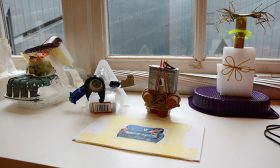
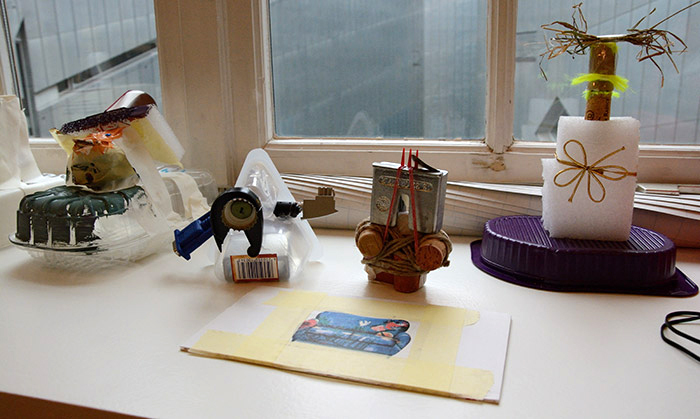
Golems made in our Golem Atelier; Jewish Museum Berlin, photo: Svenja Kutscher
Hebrew newspapers and colorful cloth remnants are lying on the floor. On the table there are wires, chains, old electrical equipment, cooking pots, used eyeglasses cases, and buttons, just to name a few of the household items spread around. Everything that would otherwise be thrown away gains a whole new meaning at the Golem Atelier.
Aside from everyday objects there are also a lot of natural materials, such as chestnuts, straw, dried leaves, and pine cones, whose scent reminds me of walks in the woods. → continue reading
Our GOLEM exhibition artists tell us what the mystical creature means to them
How did you first encounter the golem? What does the golem mean to you?
We asked some of the artists whose works are shown in our current exhibition (more about the exhibition on our website) these two questions. → continue reading
Object Lessons on our Museum’s History
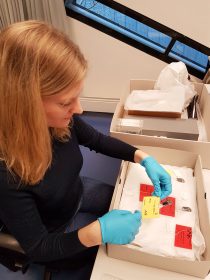
Trainee Lisa Renner performing inventory; Jewish Museum Berlin, photo: David Studniberg
I still remember my first day of work at the museum well, some months ago. Together with two new colleagues, I rode the elevator one floor down, we passed through two secured doors, and there we were: in the warehouse. There on two iron shelves towered bulging boxes and cartons as well as all kinds of objects — and with them, my job for the next eight months as an academic volunteer at the Jewish Museum Berlin: to set up a little special exhibition on the history of the museum itself.
Somewhat at a loss, I rummaged through a hodgepodge of exhibition papers, invitations, and photographs of people I didn’t know, and asked myself what a wire-frame goose on skateboard wheels or an old elevator sign were doing in a museum. → continue reading





 RSS feed
 Facebook
 Instagram
 Twitter: @jmberlin
 YouTube