A “Memorial to the Idiocy of Nazi Censorship”

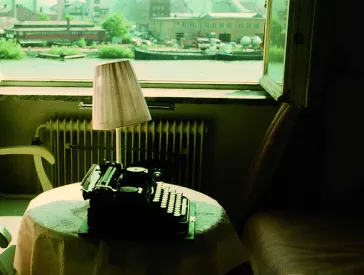
View into the empty library on today's Bebelplatz

Book Burning Memorial
This photo by Charlotte Nordahl is licensed under a Creative Commons Attribution-Share Alike 2.0 Generic license

May 10th marked the climax of spring 1933’s “Action against the Un-German Spirit” (Aktion wider den undeutschen Geist), an uprising of German students against professors who were political dissidents or Jewish, as well as ‘subversive writing’ (zersetzendes Schrifttum). We all know the images of the carefully prepared book burning in Berlin. Micha Ullmann’s memorial on today’s Bebelplatz responds to the notorious call to flames with a hauntingly quiet and empty library.

The Jewish Museum Berlin is now exhibiting some of the books which were taken off their shelves and thrown onto the pyre. The items on display are from George Warburg’s collection.

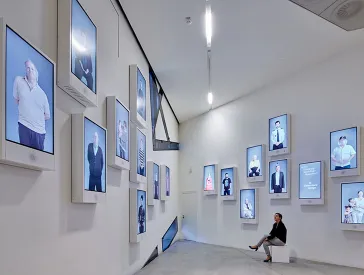
Viewing the bindings, the layouts, and the printing of these works is a pleasure in itself. We were all the more touched by George Warburg’s motivation for building his collection: in this video interview, he explains not only which works are his favorites, but he also describes his collection as an attempt, retroactively, to save the books which were burned, banned, and eliminated by National Socialists.

His “memorial to the idiocy of Nazi censorship” returns the volumes to daylight which are remembered in Ullmann’s subterranean library.

Mirjam Wenzel, Media

Hot Tears of Ice

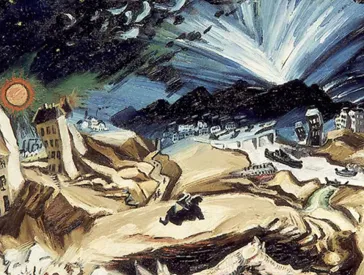
A cold wind blows tiles off of roofs and hats off of heads. The first pages of Robert Schindel’s new novel Der Kalte (The Cold One), read here by the author, are stormy. The Austrian novelist, poet and essayist born in 1944 already won over his readers with his persuasive images and poetic language in Gebürtig (Born-Where), published in 1992. Here too, the atmospheric beginning is reminiscent of the first line of the expressionist poem “Weltende” (End of the World): “From bourgeois’ pointed heads their bowlers flew, the whole atmosphere’s like full of cry” (Jakob van Hoddis).

An expressionistic painting of an apocalyptic landscape

Apocalyptic Landscape by Ludwig Meidner, 1913
© Ludwig Meidner-Archive, Jewish Museum Frankfurt-am-Main

Yet in the first scene of Schindel’s novel a world unfolds: Vienna of the Waldheim affair, from 1985 to 1989. During the 1986 Austrian election campaign, a debate ignited around the conservative candidate, Kurt Waldheim, who was indicted for war crimes. In his autobiography, he had concealed his time as a Wehrmacht-officer. Represented in the novel by the figure Johann Wais, he professes “that he had done nothing that one hundred thousand other Austrians had not done, too.” This is precisely why he functions “as an involuntary clarifying machine.” Continue reading

Reconsidering What We Talk About When We Talk About Anne Frank

Page from Nathan Englander's What we Talk about when We Talk About Anne FrankIn the past, a number of literary texts on Jewish topics contributed to Jewish culture in various ways. Some documented and revitalized oral history and folk tales in an attempt to save them from oblivion (e.g. Martin Buber’s Tale of the Hasidim); others made Jewish topics palatable to the majority society (e.g. Sidney Taylor’s All-of-a-Kind Family); and still others helped to build a Jewish community around shared experiences of ritual, emigration and persecution (e.g. Friedrich Torberg’s Tante Jolesch or The Decline of the West in Anecdotes).

Nathan Englander, one of the most sophisticated and provocative current writers, shares none of these intentions. His latest book, What We Talk About When We Talk About Anne Frank, is a collection of eight short stories loosely bound together under the title of (and a quote from) the first story, arising from a heated conversation about genocide; it refers to Anne Frank not as a historical figure, but as a metonym of victimhood. Accordingly, the stories reflect on the effect of Jewish themes, such as religion, the Holocaust and Israel, on modern Jewish identities. The author’s perspective is from within – he was born in 1970 to an Orthodox-Jewish family in New York – and critical. His gripping, intimate theatre-like episodes are fraught with tense dialog questioning the validity of Jewish cultural practice: Continue reading