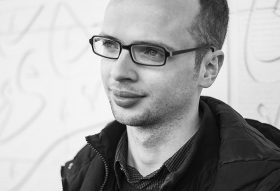
Ármin Langer; Foto: Kat Kaufmann
As part of the series “New German Stories,” we will present the book Ein Jude in Neukölln. Mein Weg zum Miteinander der Religionen (A Jew in Neukölln. My path to the coexistence of religions) by Ármin Langer on 19 October 2016. The author, who will be our guest on this evening, will talk about his life as a Jewish activist and his experiences as coordinator of the Berlin Salaam-Shalom initiative that sets an example of peaceful Jewish-Muslim coexistence.
We asked Ármin Langer three questions:
Alina Gromova: Ármin, you decided at the age of 21 years to become a rabbi even though you are from a secular family. What led you to this decision back then?
Ármin Langer: Already as a child I was open to religion, but this feeling found no frame until I was 20. → continue reading
Three Questions to Marion Kraft

Editor Marion Kraft; photo: private
On 6 July 2016, we are proud to present “Children of the Liberation,” the new anthology in the “New German Stories” series. We will welcome the editor Marion Kraft and the authors Ika Hügel-Marshall and Judy Gummich as our guests. They will speak about the experiences and perspectives of Black Germans of the post-war generation and thus illuminate a little-known part of German history and American-German relations. The volume unites the biographies and voices of a variety of authors and considers questions of racism in the past and present as well as the diverse reality of Black people in Germany today.
We asked Marion Kraft three questions in advance:
Serpil Polat: Dear Ms Kraft, how did the idea for this project come about and what was your personal motivation in realizing it?
Marion Kraft: The idea for the book came about in fall 2014 in the course of talking to some of the authors, who, like myself, were born in post-war Germany to white German women and African-American soldiers. What struck us in particular was that on the one hand the part played by these soldiers in the liberation of Germany from Nazism has been largely neglected in the recording of history and on the other hand, the experiences of racism Black people had to make in postwar Germany were in danger of being forgotten. We also found that current socio-historical research projects on the postwar era often paint a very one-sided picture of the so-called “colored children of occupation.” Thus we felt it important to make our voice heard to mark the 70th anniversary of the end of the war in 2015.
What is the origin of the title Children of the Liberation and who is meant?

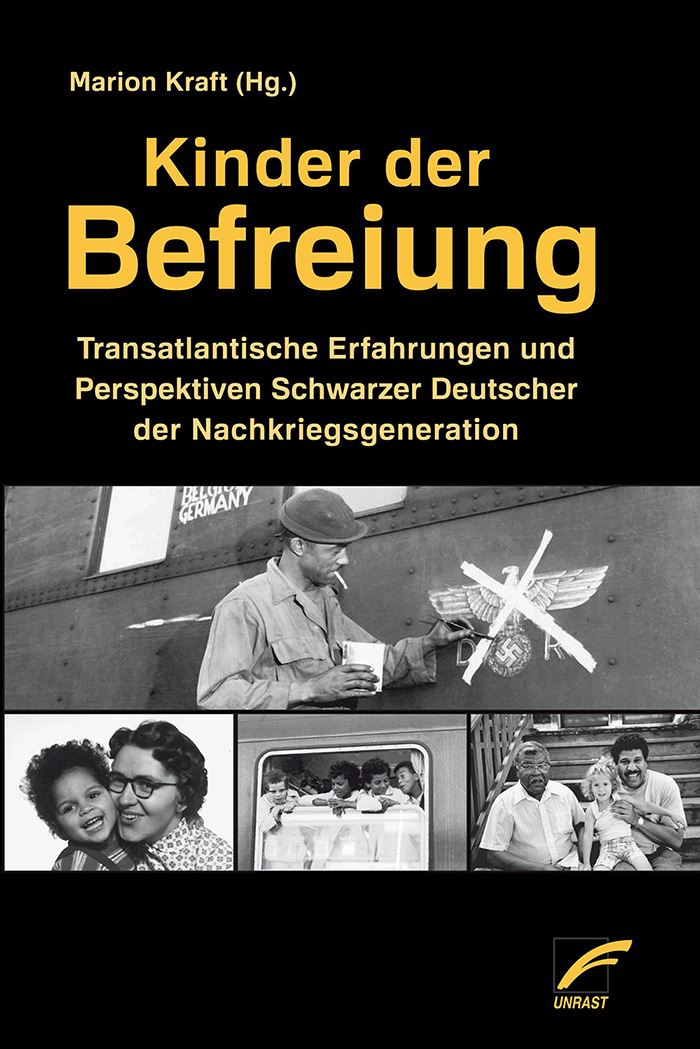
Book cover “Children of the Liberation” © Unrast Verlag
The title Children of the Liberation refers to the liberation of Germany from fascism, which the African-German-American journalist and witness of the time Hans-Jürgen Massaquoi referred to as the much-deserved demise of one of the most brutal systems of rule. “Liberation” stands in contrast to the term “occupation,” which is still used sometimes, and at the same time refers to liberation from the discriminating labels that prevailed for a long time to describe the children of Allied soldiers and German women, in particular the Black children. The book title also describes the experiences of the people who, against all odds, took the positive crafting of their lives into their own hands.
The book combines various facets – historical and academic analyses, biographical narratives, interviews, and literary texts. What is the concept behind this variety of approaches and texts?
The concept behind this is to illuminate this part of suppressed history from different perspectives. My introduction sorts the experiences of the post-war generation into the long history and current situation of Black people in Germany. The biographical narratives and interviews that follow propose alternatives to a recording of history determined by the power structures, and are bound by various scientific analyses into a collective experience. We also included some lyrical texts because they can provide a special means of reflection. Thus the volume is aimed at a diverse readership and provides various stimuli to analyze the history of and fight the still persistent forms of racism.
The questions were posed by Serpil Polat, academy programs on migration and diversity, who does her own research on biographies and racism and is very much looking forward to the evening.
Those interested in hearing more and asking further questions are welcome to attend the discussion and reading Children of the Liberation. The Perspectives of Black Germans of the Postwar Generation on 6 July 2016 at 7 pm in the hall at the W. Michael Blumenthal Academy of the Jewish Museum Berlin. Bookings on tel. +49 (0)30 25993 488 or reservierung@jmberlin.de. Further information in our calender of events.
 “Something happened there to which we cannot reconcile ourselves. None of us ever can,” said Hannah Arendt with regard to Auschwitz and its repercussions during a now legendary TV interview with Günter Gaus. A two-minute excerpt from that encounter serves today in our permanent exhibition as introduction to a film installation concerning the Auschwitz Trial (cf. this blog entry about the reopening of that part of the exhibition in summer 2013).
In our exhibition of the work of Fred Stein in 2013/14 we presented photographs inter alia of the political theorist Arendt herself, as you can read in our blog and on the exhibition website.
Hannah Arendt is a major influence also on contemporary artists: Alex Martinis Roe, in the work she produced for our art vending machine, “A Letter to Deutsche Post,” demanded a re-issue of the postage stamps bearing Arendt’s portrait (cf. our interview with the artist in this blog). Also, a symposium held at our museum last December drew on the work of Hannah Arendt as a springboard for discussion of the current significance of pluralism in theory and practice (cf. the topics addressed there, as listed in our events calendar).
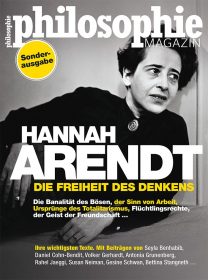
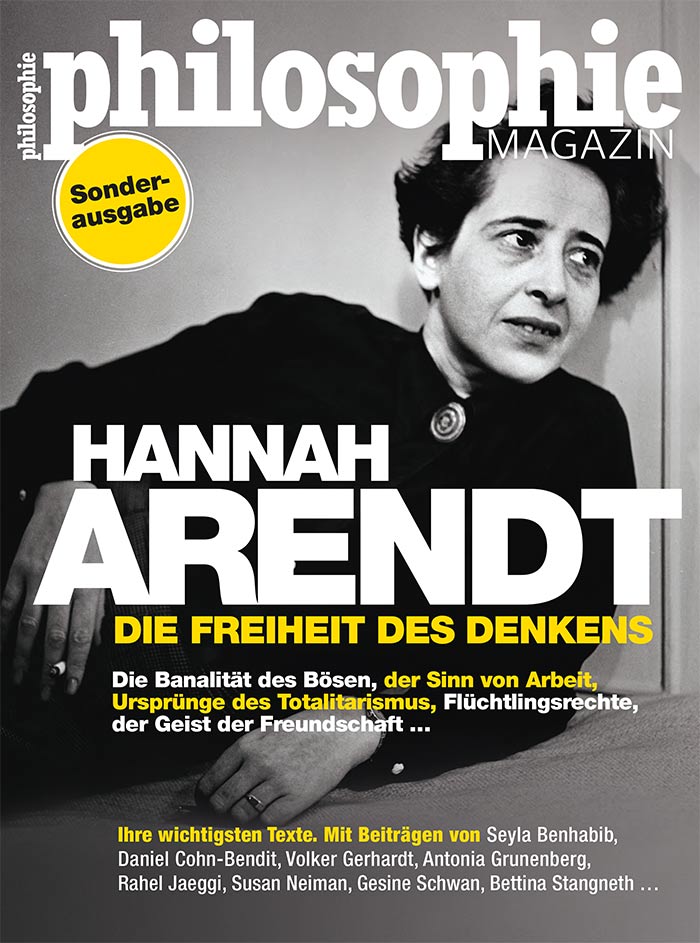
Philosophie Magazin has just devoted a special issue to this exceptional thinker. Titled Hannah Arendt. Die Freiheit des Denkens [Hannah Arendt. The Freedom of Thought], on the newsstands as of 16 June. → continue reading





 RSS feed
 Facebook
 Instagram
 Twitter: @jmberlin
 YouTube