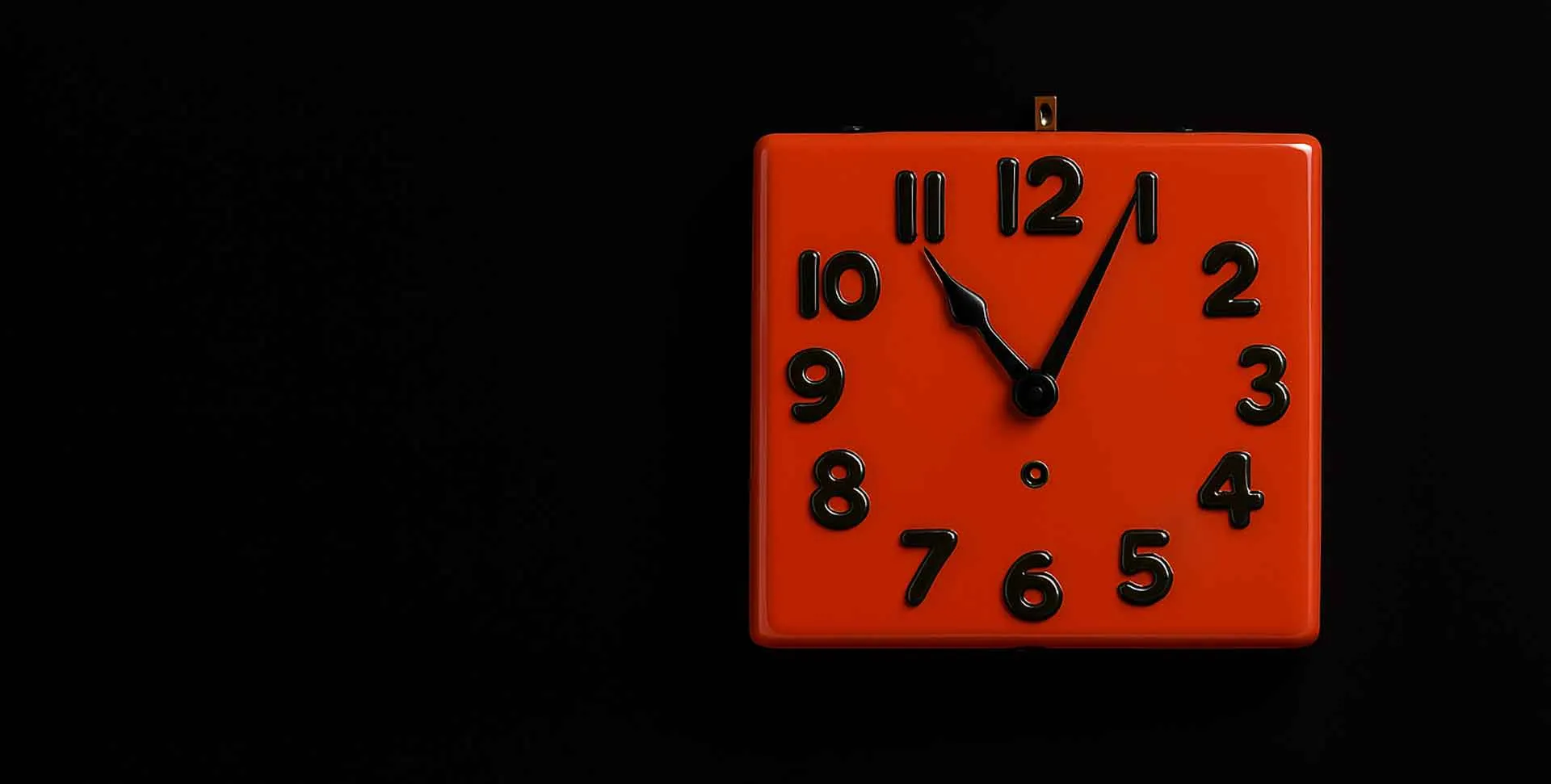
Ceramic wall clock by Margarete Heymann-Loebenstein, 1930; Jewish Museum Berlin, gift of Frances Marks, photo: Jens Ziehe
The Jewish Object: Applied Arts Collection
The Jewish Museum Berlin’s collection features a wide variety of three-dimensional objects. These range from everyday items and mass-produced goods to unique pieces that demonstrate exceptional artistic skill and creativity. In a Jewish museum, such items are categorised as “Jewish objects”, either because their original owners identified them as such or because curators interpret them through a Jewish cultural and historical lens.
Historic and Thematic Focus
Our collection focuses on objects that were created by German-Jewish artisans or companies. We are also interested in how artists’ experiences of migration are reflected in their object design.
Most of the objects in the collection date from the late nineteenth century onwards. The collection includes fine ceramics and silverware, as well as craftwork, and mass-produced goods from German-Jewish manufacturers.
The main focus is on German-Jewish contributions to applied arts from 1890 to 1936, especially to various schools of design such as the Bauhaus movement, the Reimann School, and the Bezalel Academy of Arts and Design in Jerusalem, as well as the industrial production of household objects. The fields of ceramics, silverwork, textiles, book illustration, typography, graphic design, product design, fashion, and jewelry are all represented.
Our collection includes works by Emmy Roth (1885–1942), one of the most important German silversmiths, as well as the estate of Paula Straus (1894–1943), a goldsmith and industrial designer.
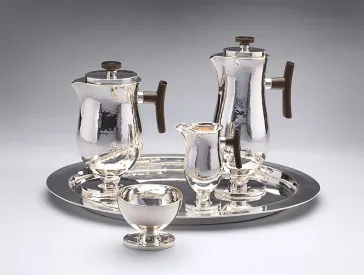
Coffee and tea service made of embossed silver and horn, Berlin, 1931; Jewish Museum Berlin, photo: Jens Ziehe
We aim to trace the destinations of artists who were able to emigrate from Nazi Germany and examine the ways in which they continued to practice their professions elsewhere.
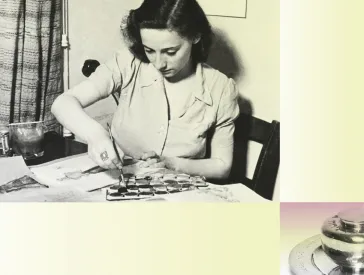
A significant addition to our collection was a large donation of ceramics designed in Germany and England by the innovative artist Margarete Heymann-Loebenstein (later Marks, 1899–1990).
Paula Straus: bracelet and necklace, Germany, 1921–1939, gold; Jewish Museum Berlin, donated by Monica Phillips, photo: Roman März
Research
We research the work of German-Jewish artists who were forced to emigrate from Germany. David Heinz Gumbel, Ludwig Yehuda Wolpert, Victor Ries, Eva Samuel and Hedwig Grossmann, for example, went to British Mandate Palestine (Israel since 1948), while Hermann Gurfinkel/Garfield emigrated to the United States.
We are also interested in the work of contemporary Israeli designers who have moved to Berlin in large numbers.
Michal Friedlander, Curator of Judaica and Applied Arts, on her research into forgotten female ceramicists; Jewish Museum Berlin
How can I conduct research using the museum’s archive, collections, and library?
Our Reading Room is open to the public. You can also research using our library’s holdings and some of our collection’s holdings online. To view additional holdings, please contact the responsible curators.
How can I donate objects, photographs, and documents to the museum?
Do you own materials related to Jewish culture and history in Germany that could be of interest to us? We would be delighted to hear from you!
I would like to depict or borrow an object from your collections. Who should I contact?
Your contacts for photo permissions are Valeska Wolfgram and Birgit Maurer-Porat (T +49 (0)30 259 93 433, email: fotodoku@jmberlin.de). Please note that the processing time for requests can take between 4 and 6 weeks.
Loan requests must always be made nine months before the beginning of the exhibition. Requests must be made in writing to the director (Hetty Berg, Stiftung Jüdisches Museum Berlin, Lindenstr. 9-14, 10969 Berlin).
Contact
Michal S. Friedlander
Curator of Judaica and Applied Arts
T +49 (0)30 259 93 511
angewandtekunst@jmberlin.de
- Address
Jewish Museum Berlin
Lindenstraße 9–14
10969 Berlin
Our Collection
An overview
- The objects we collect: information & FAQ
- Search our collection: a growing number of items from our digitized collection are available to view and search online (in German)
Details
- Archive: documenting Jewish life
- Audiovisual Media: historic sound recordings, family films and video art
- Library: books and more about Jewish art, culture, and history
- Fine Arts: visual culture of German-Jewish history and the present day
- Family Collections: The Papers and Mementos of German-Jewish Families
- Photography: from the beginnings of photography to the present day
- The Jewish Object: Material Culture: objects and textiles for nonreligious purposes
- Current page: The Jewish Object: Applied Arts: objects produced by German-Jewish craftspeople and companies
- The Jewish Object: Judaica: ritual and everyday items for religious purposes
Digital Content
- Online Showcase: digital presentation of our collection holdings, video projects, and more
- Object Showcase: stories from our collection
See also
- The Lanzmann Collection – Catalog, Preserve, and Share the Legacy of The Claude Lanzmann Audio Archive
- The History of Our Collection: learn about the initial inspiration and transition to today's museum
- Our Collection Management: Protection, preservation, and documentation
- Sources of Collection Holdings: in publications of the Berlin museum (1978 to 1995)
- Provenance Research: unveiling the origins of our objects
- Conservation: how to presperve our objects for future generations